
Few things are more stressful for a parent than watching a vibrant toddler wilt under the grip of a sudden stomach bug. When acute diarrhea strikes, your little one loses energy, fluid, and color frighteningly fast. Knowing the safe foods to eat with diarrhea for kids and toddlers is essential for keeping your child out of the pediatrician’s office, protecting them from dangerous dehydration, and gently nursing their little tummy back to health.
The Pediatric Vulnerability to Diarrhea
To understand why a child’s response to a gastrointestinal bug requires specialized care, you must look at pediatric physiology. Infants and toddlers have a significantly higher percentage of total body water than adults, coupled with a much higher metabolic rate.
This combination means that when acute diarrhea hits, children dehydrate exponentially faster than adults. A fluid deficit that causes mild fatigue in an adult can lead to severe pediatric dehydration, lethargy, and electrolyte imbalances in a toddler within hours. Recognizing the warning signs—such as dry lips, crying without tears, sunken eyes, or a wet diaper missing for over six hours—requires immediate action, anchored by targeted hydration and preventing dehydration in sick children.
The Myth of Restrictive Starvation
Decades ago, standard medical advice for a child with diarrhea was to “rest the gut” by withholding all food for 24 hours. Modern pediatric gastroenterology has entirely debunked this practice.
Extended fasting actually starves the enterocytes—the specialized cells lining your child’s small intestine—prolonging the illness and delaying mucosal repair. Current medical guidelines advocate for early, gentle refeeding. Introducing gentle foods for children’s upset stomach as soon as rehydration fluids are established provides the cellular fuel required to regenerate the gut lining, shorten the duration of diarrhea, and maintain your child’s energy levels.
Top Kid-Friendly Safe Foods and Fluids
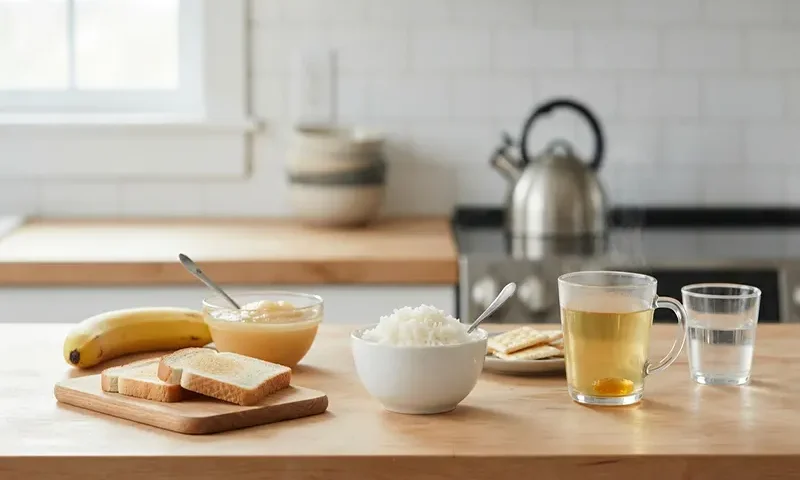
Navigating a sick toddler’s appetite requires offering familiar, non-threatening textures that are naturally binding, bland, and easy to digest.
1. Pediatric Electrolyte Solutions and Fluids
Before introducing any solid food, you must establish proper hydration using medical-grade tools.
- Oral Rehydration Solutions (ORS): The undisputed gold standard. If your toddler refuses to drink liquid from a cup, freeze pediatric electrolyte solution into homemade ice pops; children fighting a fever or bug will often happily suck on an electrolyte popsicle.
- Diluted Bone Broth or Clear Chicken Broth: Provides soothing warmth and essential sodium to help little bodies retain water.
2. Binding Starches and Bland Carbs
Once fluids are tolerated, introduce clean, low-residue carbohydrates that absorb excess water in the colon and firm up stool consistency.
- Plain White Rice or White Pasta: Well-cooked, soft noodles or plain rice offer clean energy without fiber irritation.
- Saltine Crackers or Plain Pretzels: Most toddlers love crackers, and the mild salt content helps replenish lost sodium while settling an unsettled stomach.
- Cream of Rice or Oatmeal: A warm, smooth bowl of porridge made with water or plant milk provides comforting, easily digestible calories.
3. Soothing Fruits and Root Vegetables
- Mashed Ripe Bananas: A universal kid favorite. Bananas provide gentle soluble fiber, easy-to-assimilate natural sugars, and a heavy dose of potassium to restore electrolyte balance.
- Smooth Unsweetened Applesauce: Rich in natural pectin, applesauce acts as a gentle binder for the digestive tract.
- Boiled Carrots and Potatoes (Skinless): Softly cooked and mashed root vegetables deliver beta-carotene and soothing starches.
4. Gentle Toddler Proteins
- Soft-Scrambled Eggs: Prepared with a tiny touch of butter, soft eggs offer bioavailable protein to prevent muscle weakness without heavy fats.
- Shredded Chicken Breast: Extremely lean and easy to chew, mixed into a warm bowl of broth or rice.
Tactical Feeding Strategies for Resistant Toddlers
When a child feels miserable, they will often refuse food entirely. Forcing a toddler to eat will only trigger power struggles and vomiting.
Golden Rule of Pediatric Hydration: Never force or rush a sick child to eat. Offer tiny, tablespoon-sized portions every hour, and prioritize fluid intake above all else during the first 24 hours.
- Embrace Grazing: Abandon the concept of three meals a day. Leave a small bowl of saltines or plain rice crackers within your toddler’s reach so they can nibble at their own pace.
- Keep Food Visually Appealing and Neutral: Avoid serving foods with strong aromas or vibrant, unfamiliar colors that can trigger nausea in a sensitive child. Stick to comforting, familiar classics.
Foods to Strictly Avoid in Little Ones
Feeding a child the wrong foods during a gastrointestinal illness can instantly amplify diarrhea and abdominal cramping. Completely avoid the following items:
- Fruit Juices and Sugary Sodas: High-sugar apple juice or grape juice exerts an osmotic pull in the intestines, drawing water directly into the colon and making diarrhea significantly worse.
- Adult Sports Drinks: Formulated for adult athletes, these beverages contain far too much sugar and incorrect electrolyte ratios for a toddler’s small kidneys.
- Dairy Products: Temporary lactose intolerance is extremely common following a stomach bug; milk, cheese, and yogurt can trigger painful gas and bloating.
- Greasy, Fried, or Spicy Foods: Fast food and heavy meals slow down digestion and overwhelm an inflamed gut.
By implementing these what to feed a toddler with diarrhea guidelines, you transform a stressful illness into a managed recovery. Utilizing a structured pediatric recovery diet for stomach bugs ensures your child stays hydrated, feels comforted, and regains their strength safely and quickly.

